DISCLAIMER

I claim no ownership of any images or writings posted here unless otherwise stated. i.e. [placed in brackets] All images and writings are owned/copyrighted by others. I make no income from their use and I am sharing them for the newsworthiness and/or cultural value they represent as well as for educational purposes. No infringement is intended and any media used is not for commercial purposes. If you are the person responsible for an image or writing that I have posted, please contact me in "comments," showing proper documentation and I will remove it immediately.

Search This Blog

Thursday, February 6, 2025

MODERN TIMES


Premise: The Tramp (Charlie Chaplin) begins the film working the assembly line in a mammoth factory. The stress of the job, as depicted through some elaborate comic set pieces, pushes him toward a mental breakdown. Jailed after he’s mistaken for the leader of a communist protest, The Tramp is released from jail after thwarting a breakout. But, back on the street, he finds employment hard to come by, though he’s newly motivated after befriending a spirited gamine (Paulette Goddard), who becomes his partner. More mishaps in employment and economic distress follow, including a stint as a department store’s night watchman and a singing waiter.

Keith: Speaking broadly, most of the films on the Sight and Sound list belong to the height of the sort of film they represent. Looking back at what we’ve covered already, Once Upon a Time in the West comes from the peak of the spaghetti western. Ugetsu Monogatari comes from the blossoming of Japanese films in the years after World War II. Etc. That can’t be said of Modern Times, a (mostly) silent film made almost a decade after the premiere of The Jazz Singer. But a lot had happened in those nine years, and it’s a testament to Charlie Chaplin’s stardom that he was able to continue working as he always had, making silent comedies even after his contemporaries had either transitioned to sound (with varying degrees of success) or called it a day. There’s an autumnal sense not far beneath the surface of Modern Times. Chaplin had considered making it a full-on talkie. Instead, the film finds him attempting silent comedy on a scale he’d never tried before, as if realizing he might never get a chance to do it again.

Chaplin hadn’t released a feature in five years, most recently City Lights in 1931 (which we’ll be arriving at later). But he’d remained a celebrity and Modern Times is informed in part by world travels in which he’d met everyone from Winston Churchill to Mahatma Gandhi to Henry Ford. Both Gandhi’s criticism of technological advances and Ford, who’d done more than anyone to escalate the rate of production in the 20th century, informed Modern Times. The film’s filled with jokes and gags but the title’s not one of them. This is Chaplin making A Statement.

But what kind of statement? Chaplin’s politics leaned left, which led to a shameful exile from America years later. But Modern Times keeps the political personal. We never stray from the plight of The Tramp and, a bit later, The Gamine. It’s a film about two have-nots and their bumpy ride through some of the toughest years of the 20th century, economically speaking. The Tramp has always been an exceptional figure in Chaplin’s movies, announcing himself as a misfit from the moment he toddles into the frame. But he’s also been a stand-in for the Everyman, never more than here.

Yet for all that, I think this is also one of Chaplin’s funniest films, great from start to finish but never better than in its opening scenes, in which The Tramp’s attempts to work on an assembly line cascade into chaos. It’s as graceful a marriage of comedy and commentary as I’ve ever seen. Scott, what are your overall thoughts on the film? And I want to go deeper into individual bits, but let’s talk first about the opening stretch I’ve already mentioned, which takes place in a dehumanizing environment not that far removed from Fritz Lang’s Metropolis (also ahead on the list). It immediately announces that Modern Times has more than laughs on its mind, doesn’t it?

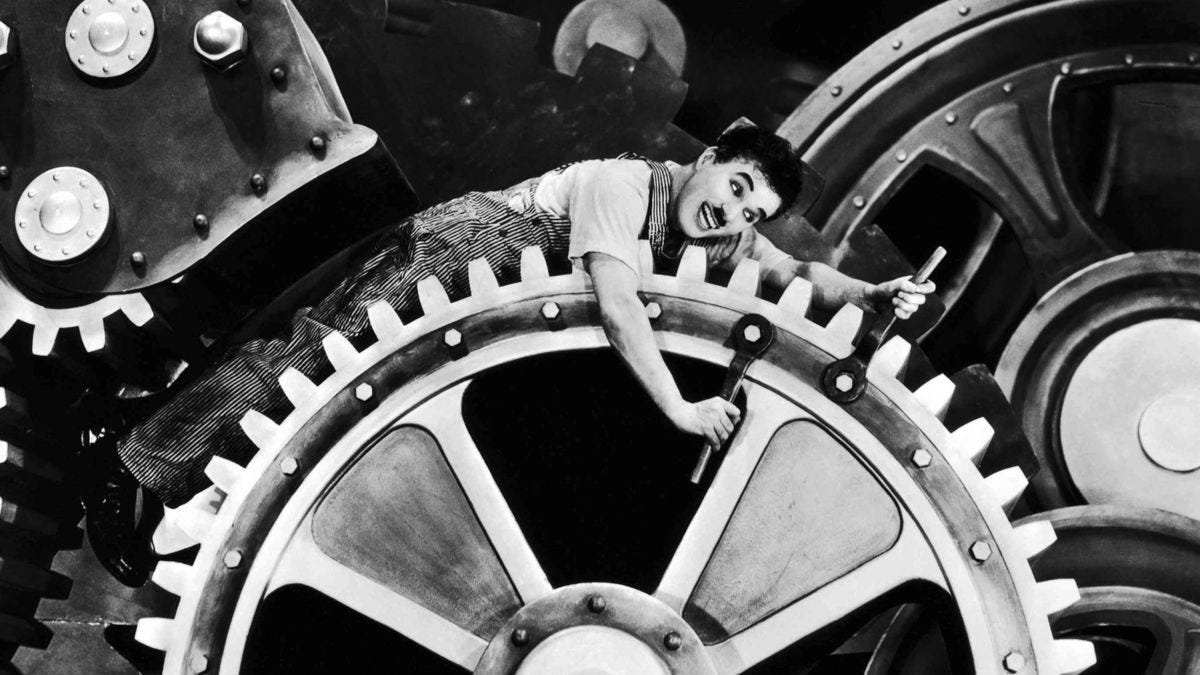
Scott: Oh, without question. From the opening shots, which juxtapose a herding of sheep with the masses of human workers emerging from a subway station, Chaplin announces the film as a statement on the industrial age, which strips mankind of its humanity before depositing them penniless on the street. I don’t think Modern Times gets any better than this first section, in which The Tramp is logging time as an assembly line drone in a factory that has no discernable product. It’s a masterstroke both in conception and production design to construct this massive factory that exists entirely in the abstract—all pulleys and wheels and giant gears, in the Metropolis mode, supervised by an all-seeing CEO and operated by laborers who are often pitted against each other.

For The Tramp, the job is to tighten two bolts on the assembly line with a wrench in each hand. We never see how this small piece of work might figure into a larger construction, only that those bolts must be tightened efficiently, especially as the big boss keeps ordering the line to go faster and faster. This brilliant comic sequence seems to have inspired one of I Love Lucy’s most famous bits, when Lucy and Ethel get a job at the chocolate factory and struggle to keep up. But Chaplin takes it further by giving The Tramp a sort of repetitive stress disorder where his wrenching arms keep moving around even when he’s not on the line. And if he does happen to have those wrenches still in his hands, he seeks to tighten anything that looks like a bolt—the buttons on a lady’s skirt, for example, or a co-worker’s nipples. It’s unmissable as commentary, but still scores big time as comedy.

Meanwhile, the decisions at this factory are being made by a CEO who’s shown reading the funny papers and monitoring his work staff through multiple cameras and screens, including one in the bathroom, where he yells at The Tramp to stop slacking and get back to the line. As you note, cinema was well into the sound era when Modern Times was produced, and it’s certainly notable to see where Chaplin takes advantage of sound in an otherwise silent comedy. Put simply here: The boss has a voice and his workers do not. He barks orders like “Section Five, more speed!” from his office and a beefy, shirtless level-puller out of Metropolis makes it happen, leaving The Tramp and others to suffer in silence.
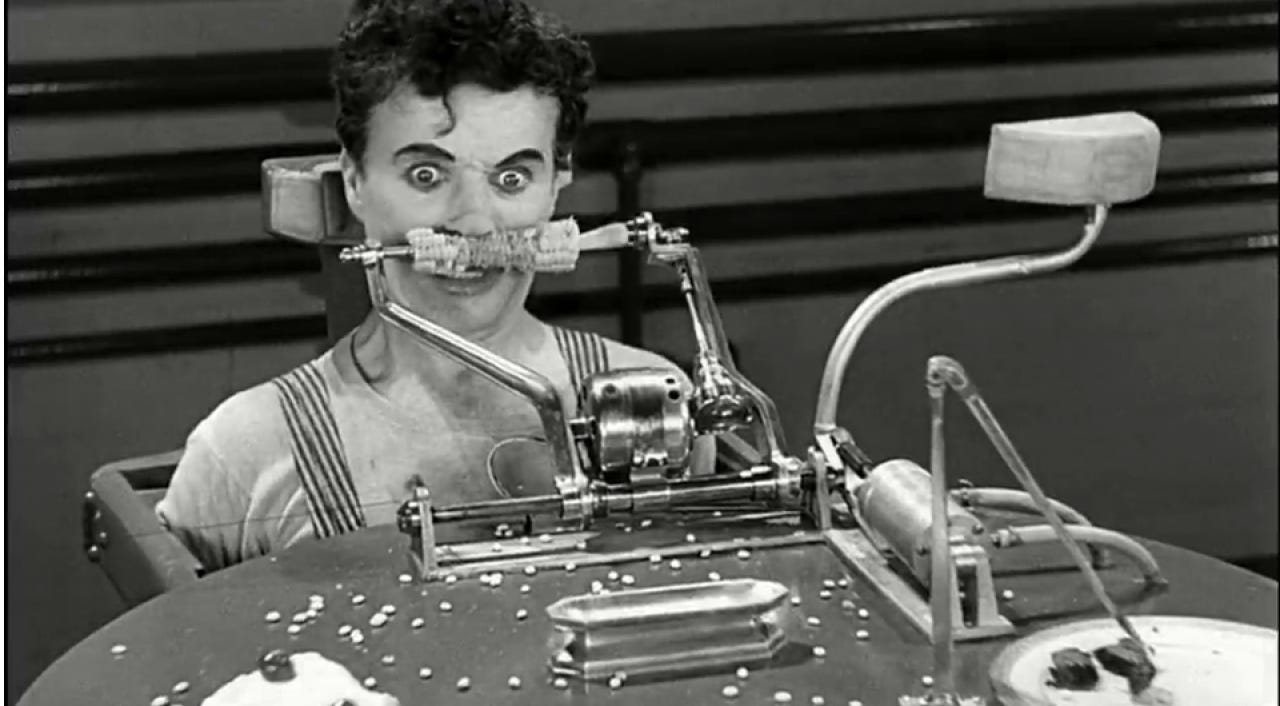
The opening section also has one of the film’s funniest bits, as “The Mechanical Salesman,” Mr. J. Willicombe Billows, introduces the Billows Feeding Machine, which will allow workers to continue to be productive when they’re on their lunch break. It’s a slight disappointment, frankly, that we don’t see The Tramp having to work the wrenches while being force-fed his lunch, but it’s still incredibly funny to see this malfunctioning gizmo splash soup in his face and assault his teeth with the “double knee-action corn feeder.” I wrote earlier about the Modern Times influence on I Love Lucy, and here you see the origins of a film like Jacques Tati’s Mon Oncle, which features a wholly automated house that’s constantly backfiring on our hero.

As social commentary, it’s hard to miss Chaplin’s intent when The Tramp slides into one of the great factory machines and literally gets grinded up in the gears of capitalism. Though The Tramp gets arrested later for inadvertently leading a communist protest, the role and rights of the common worker are central to the politics of Modern Times, which frames The Great Depression as a broken promise made to ordinary people who took this grim industrial labor and were deposited without anything to show for it. Granted, The Tramp isn’t winning any Employee of the Month plaques, but to see him kicked around from job to job (and from jail stint to jail stint) underlines the hand-to-mouth instability of the system.

Does Modern Times get any better than this first section, Keith? I’m not sure that it does, but there’s so much here to treasure, including Paulette Goddard as The Gamine. What do you make of her contribution to the film? And of the life she and The Tramp imagine for themselves?

Keith: I like Goddard a lot in the movie, though Chaplin’s camera loves her so much it takes an imaginative leap to think of her as a street urchin. That’s not to undersell Goddard’s comic talents or what The Gamine’s indomitable spirit brings to the film. It’s The Gamine that kicks off one of my favorite sequences in the film, the one you reference above: the fantasy of settling down into a nice, prosperous life, complete with a cow who wanders by to offer milk. I love it both for the snapshot it offers of the American Dream circa 1936 and for what it says about these characters, who are so far removed from the life they’re imagining for themselves that they can’t quite get the details right.
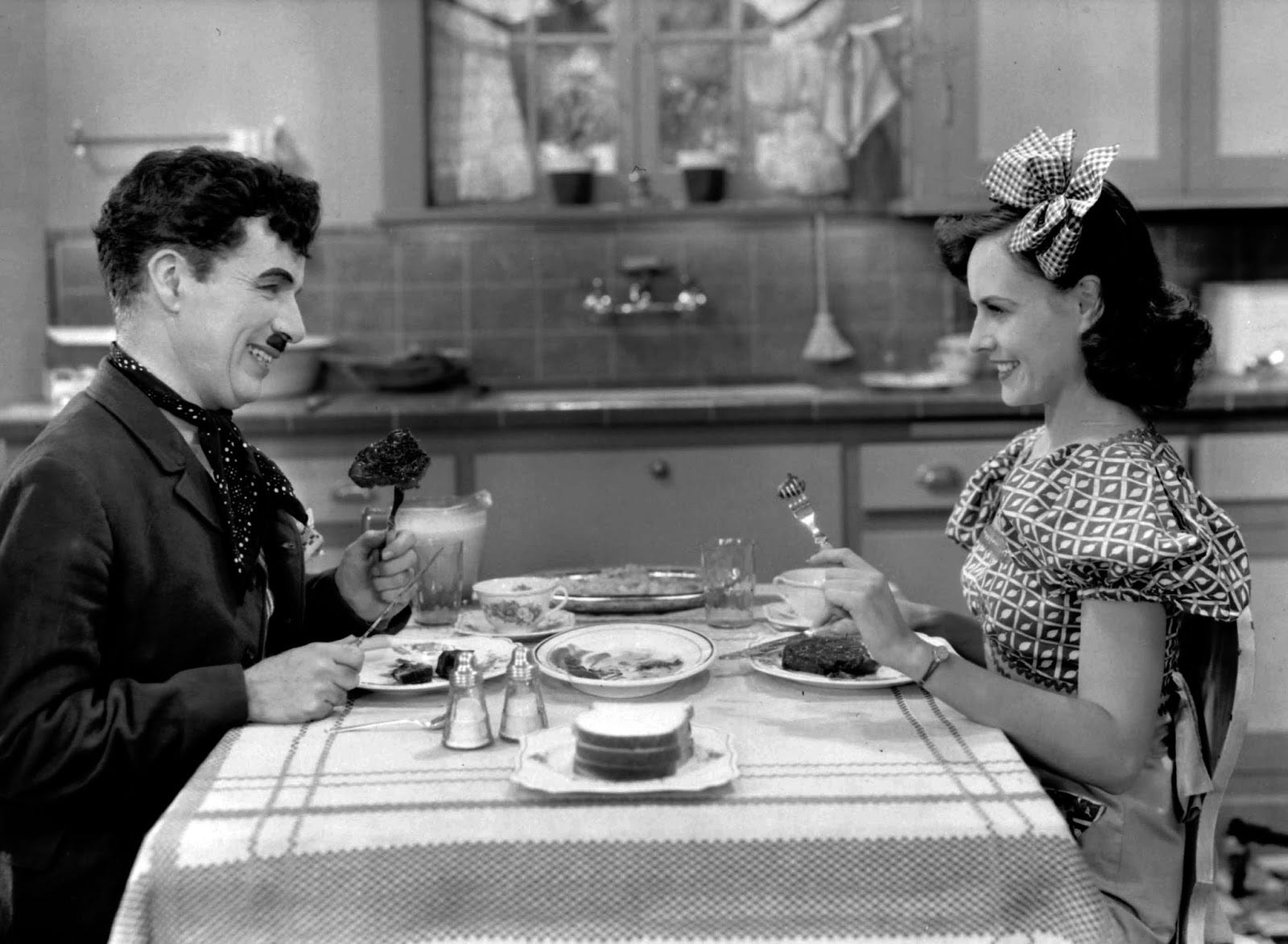
For some of the same time-traveling reasons I love their vision of bungalow life, I appreciate the sequence set in a department store. We’ll get to the inspired comic moments in a second, but I enjoy staring at the shelves and displays to see what’s on offer (which includes a stuffed Mickey Mouse that gets a quick moment in the spotlight). OK, as for the comedy, the roller-skating on the edge of the ledge is a highlight. It also makes my heart catch in my throat every time, even though I know Chaplin was never in danger while filming it. The robbery scene also provides one of Modern Times’ most memorable and thematically on-point moments. When one of would-be thieves recognizes The Tramp, he tells him, “We ain’t burglars — we’re hungry.” It’s a thin line that separates one from the other, as many learned directly during the Great Depression.

Wanting to get a sense of the environment in which this film was released, I dug up an old article from gossip columnist Sidney Skolsky, written before the film’s release, and before Skolksy had seen it, headlined “In Defense of Chaplin.” Some choice quotes:

“There are many who believe that Charlie Chaplin is dated, and they expect the flicker, ironically titled, Modern Times, to prove it. It is five years since Chaplin released a picture; during that time there hasn’t been one silent feature. [...] Today a silent flicker is a relic, the method of acting for them is considered obsolete [...] A new generation has grown up that does not know the Chaplin of the screen. They may wonder if their fathers were too hasty in proclaiming Chaplin a genius.”

Parts of Modern Times find Chaplin nodding to contemporary tastes. The soundtrack features sound effects throughout and though we never hear The Tramp speak, we do hear him sing a nonsense song while working as a waiter. The film would become a critical and commercial success, but this would be the end of the line for Chaplin as a silent filmmaker, and for The Tramp (as much as Chaplin’s character in The Great Dictator resembles The Tramp, enough differences set them apart to make them distinct). I wonder if audiences of the time saw reminders of what had been lost with the end of the silents? The way Chaplin mimes The Tramp’s surprise and delight after accidentally getting high on cocaine, for instance, needs no dialogue, nor does the final scene of The Tramp and The Gamine walking into the sunset.

Scott, what did you think of the film’s use of sound, particularly the song? Chaplin otherwise makes no concessions to the taste of the times, using intertitles, shooting at 18fps, and using a lot of long takes. And what do you make of the ending and how it connects to all the social commentary that precedes it?

Scott: If Chaplin had really wanted to dig in his heels, then Modern Times might have been wholly silent, as if it were made during the era where sound was not technically possible. That’s not the case, obviously, so Chaplin’s selective use of sound becomes a creative weapon, akin to techniques like a great filmmaker’s use of on- and off-screen space. He may use intertitles and shoot at a lower frame rate, but you do sit up in your chair a bit when he deploys sound because it’s unexpected and pointed.

I already mentioned how you can hear the factory boss speak in the opening section, barking orders through various screens to increase production and keep his workers from spending too much time off the clock. It’s a simple expression of the factory hierarchy: The boss gets to speak and his employees don’t have the power. To extend the point even further, it seems notable that Chaplin emphasizes the sound effects on the machines, too, that take precedence over the men who operate them. Technology was as much a threat then as it would become when automation would take people’s jobs in the future. (The bolt-turning that The Tramp has to do all day is a repetitive task that’s better suited to machines and I think Chaplin makes us aware of that.)
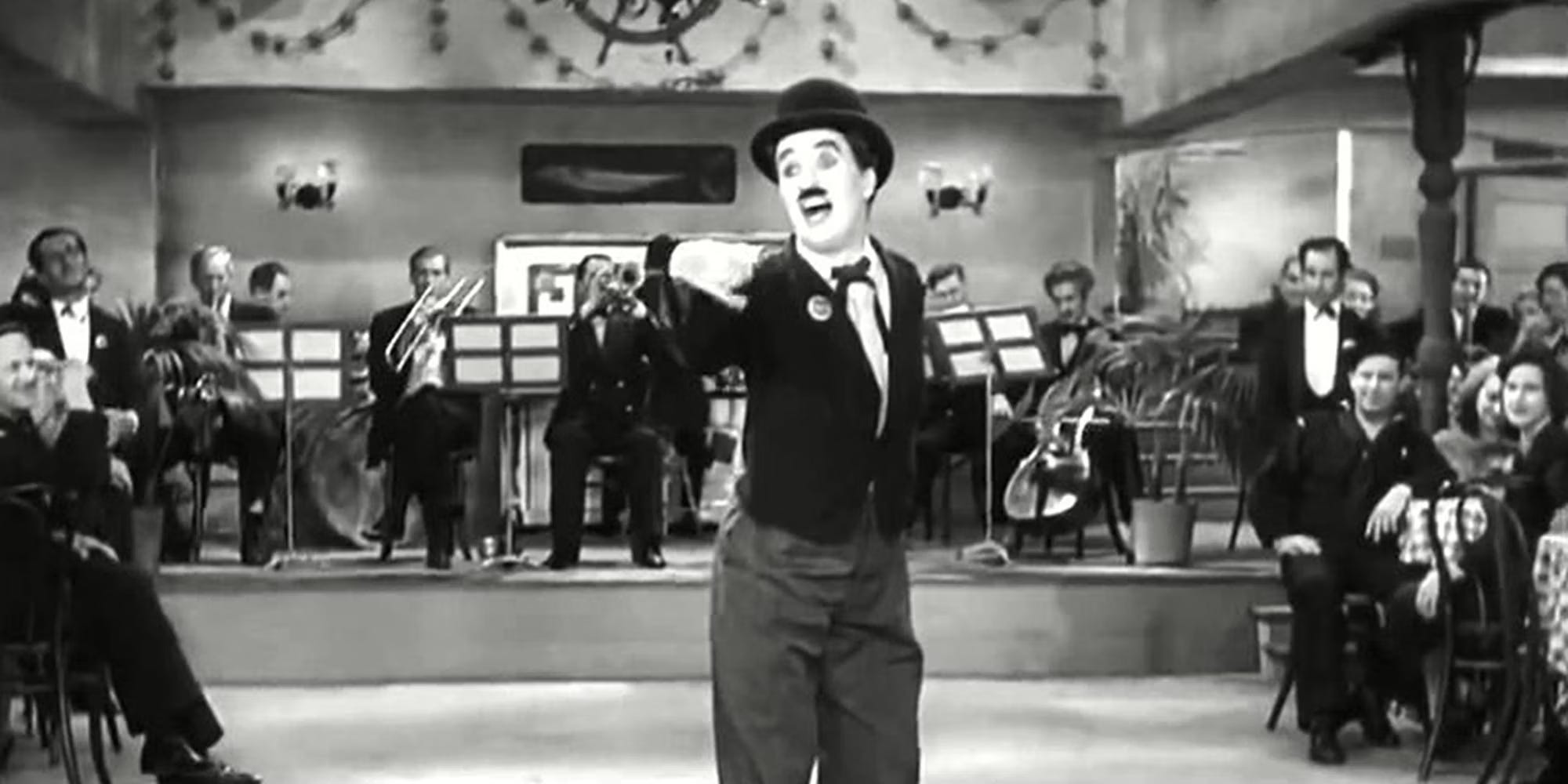
The nonsense song that Chaplin sings at the end, “’Titine, Je cherche a Titine,” has a huge impact for a lot of reasons, not least because we’ve seen The Tramp fail in every job situation and he improvises his way into a success here. But mostly, this is his “Garbo laughs” moment, when an audience conditioned to never hearing Chaplin’s voice can be surprised and delighted by it. It’s also Chaplin re-introducing himself to a new era, despite his obstinance in making a silent comedy when everyone else had been making talkies for years. It’s ironic and absolutely charming that what he’s saying in the song is total gibberish, but the sequence reveals a confidence that he can make a leap that plenty of silent-movie stars couldn’t manage.

Much of Modern Times strings together setpieces that are sometimes barely related to “modern times,” other than referencing the hardships of the Great Depression. What makes it cohere for me is that most of the sequences end with The Tramp getting arrested and going to jail, which provides him a security that he prefers to the uncertainty of a dried-up labor market and a roof over his head. When The Gamine dashes off with a loaf of bread from a bakery, it’s only half-heroic when he steps up and volunteers to take the rap for her. He’s more comfortable when he’s not botching odd jobs on the outside.

Do you have a favorite sequence of The Tramp at work? The obvious standout candidate is the security gig at the department store, which is great for all the reasons you mention, between the fantasy of living it up on every floor (shades of future films, like Dawn of the Dead, making a utopia out of an empty mall) to the skating sequence to the revelation that the burglars are really in the same boat as everyone else. I also like the gag on the dock construction site where The Tramp pulls a wedge and a half-built ship drifts off into the sea. But my vote is for The Tramp returning to factory work with a gig as a mechanic’s assistant, which calls back to the beginning of the film. He knocks into levers, crushes a family heirloom, spills a toolbox into the gears of a machine that spits the tools right back out, and then gets the mechanic himself so squeezed in the works that he has to feed him lunch upside down. Now The Tramp is the Billows Feeding Machine, jamming a celery stalk and egg into the man’s mouth, along with custard pie and hot coffee. An inspired bit of madness.

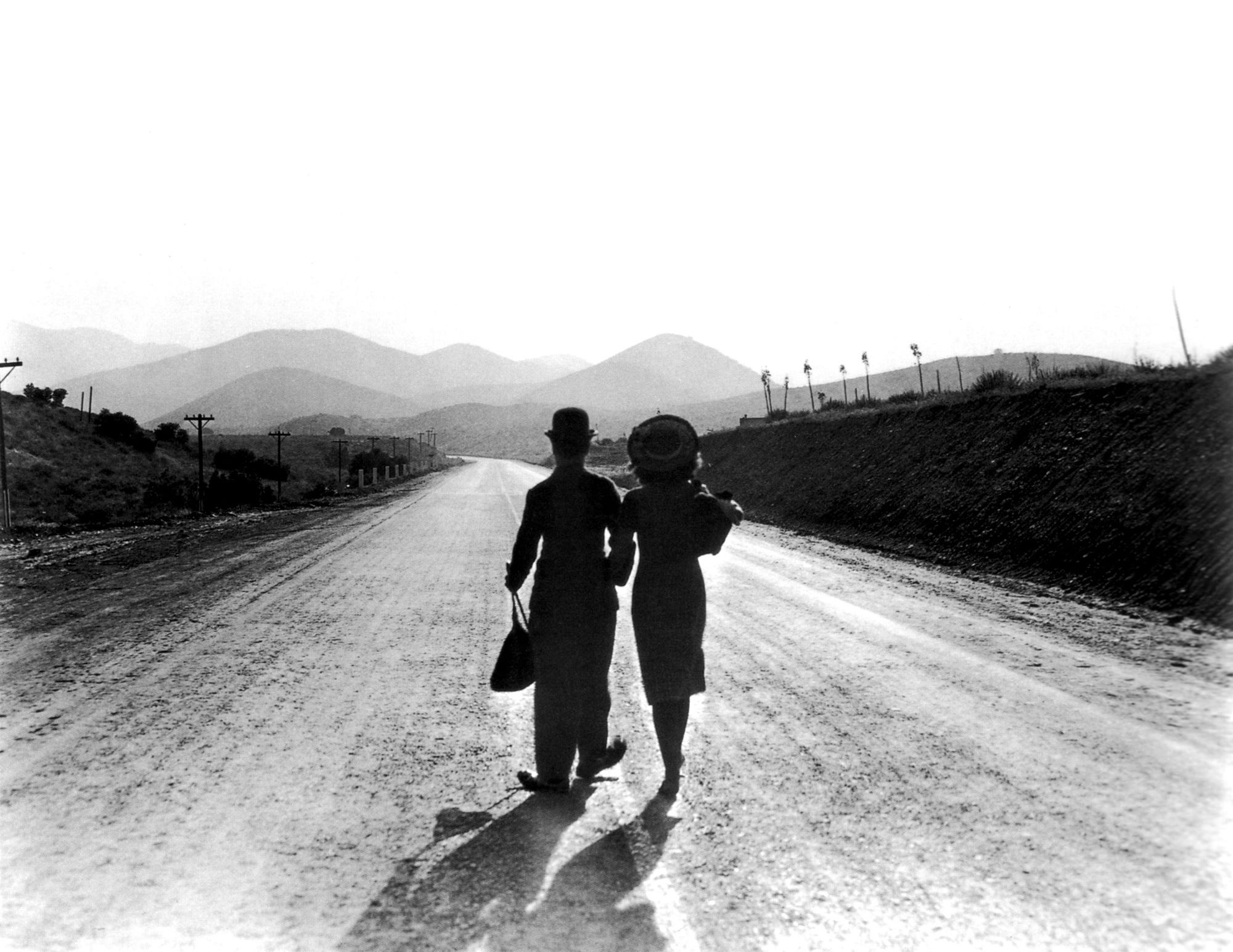
And yet, Modern Times isn’t a despairing film in the end, which speaks to Chaplin’s sentimental streak perhaps, but also his belief in the redemptive powers of love and the human spirit. The end finds The Tramp and The Gamine in what would seem to be their lowest moment, reduced to hitchhiking on the side of the road with their few possessions wrapped up like hobos. She asks, “What’s the use of trying?” and he’s defiant, saying “Buck up. Never say die. We’ll get along.” In the gorgeous last shot, they’re heading down the road of life together with a smile on their faces. They have each other and that’s a start.

Any final thoughts from you, Keith? It seems like the excitement over Buster Keaton’s work in recent years—and by “recent years,” I’m thinking all the way back to the Kino VHS box that blew many people’s minds (including my own) decades ago—has come at the expense of Chaplin’s reputation. Are we underrating Chaplin now?

Keith: On the subject of favorite bits of work business, I’m not sure you left much for me! So I’ll just throw in a bit of trivia about the film originally including a scene in which The Tramp enlisted in the army and went to war. But because Chaplin exercised such tight control of his films, destroying virtually all unused footage, we’ll never see that, or the alternate ending in which The Gamine becomes a nun.
As for underrating Chaplin, that’s a tough question. I feel like Chaplin has been judged “too sentimental” and compared unfavorably to Keaton for as long as I’ve been reading about movies. I just don’t see it, honestly. I won’t argue that he made sentimental movies, it’s the “too” that trips me up. I’m also not sure that Chaplin was well-served in terms of home media and availability over the years. The first Chaplin I saw was a public domain VHS tape of The Gold Rush, which I loved but wasn’t exactly the best introduction. Criterion’s been doing a pretty good job with the features and, on the Criterion Channel at least, the Mutual shorts, which features the best of his pre-features career. I’ve loved him since first seeing The Gold Rush and I’m happy to see what I think are his two best films made the Sight & Sound 100, just as they did in 2012 and 2002. But they’re the only two in the top 250 and The Gold Rush also made the top 100 in 1992. But I guess, on the whole, Chaplin’s stock remains more or less unchanged over the past few decades, at least on this poll. The Tramp stays in the picture.

Wednesday, February 5, 2025

TERMINATOR 2


Although the first act is somewhat constricted by hardwaring of the story arteries, chunks and bursts of raw, quirky human behavior ultimately burst into this carnage colossus. These small, funny, odd moments do much to soothe us from the bombast, as well as clue us to the film’s ultimately optimistic vision.

Still, the bulk of Terminator 2 is the war between the two Terminators, and Cameron and his ace crew have marshaled all the forces of special effects technology, as well as motorcycle maintenance, to accomplish this staggering one-on-one blowout.

Throughout, state-of-the-art technical contributions thunder like explosions. Adam Greenberg’s torrid cinematography; Conrad Buff, Mark Goldblatt and Richard A. Harris’ kinetic cuts; Joseph Nemec III’s visionary production design; together with Brad Fiedel’s heart-pounding score and Gary Rydstrom’s percussive sound design infuse Terminator 2 with a power and force a quantum leap beyond its generic peers.

The players, astoundingly, more than hold their own against this torrential visual/aural onslaught. Schwarzenegger is not only back, but he’s more imposing and heroic than ever. His comic sense, once again, is one of the strongest parts of his arsenal and often helps to save the action from its massive musculature. Furlong’s nervy performance as the nervy 12-year-old savior catapults the story to its fullest human dimension, while Hamilton is superb as his gutsy mother.

IT HAPPENED ONE NIGHT 1934


When It Happened One Night (1934) was released, both director Frank Capra and screenwriter Robert Riskin were ascending in Hollywood but had not yet reached their peak.
Capra had been directing for Columbia Pictures throughout the late 1920s—He directed two Harry Langdon comedies--and in the early 1930s, fast moving talkies like Manhattan Madness (1930), Ladies of Leisure (1932) and Lady for a Day (1933), helping elevate the studio from a Poverty Row outfit to a major player.

It Happened One Night, based on a short story called "Night Bus" by Samuel Hopkins Adams, faced a difficult start, with actor after actor rejecting the lead roles. Eventually Claudette Colbert took on the role of Ellie and Clark Gable was loaned from MGM to play Peter. Despite the initial reaction--it opened to only so-so reviews, the film performed well in smaller towns and ended up winning every Oscar for which it was nominated, including Best Picture, Best Actor, Best Actress, Best Director, and Best Writing (Adaptation), marking the first time in history that one film swept the top five Oscar categories.

"It’s the story of a salty, hooch-swilling reporter (Clark Gable) who is thrown together with a spoiled society heiress (Claudette Colbert) on an overnight Greyhound bus to New York. The film simply follows them as they bicker, backbite and clamor for the upper hand. Every line of dialogue is calculated bliss, the chemistry between the leads is magnificent, and the backdrop of Depression-era America allows for a prescient and amusing subplot about how well-heeled urbanites are compelled to misbehave when they have no money in their designer pockets. It’s probably more historically important than it is a masterpiece (the last 20 minutes take the missed connections and misunderstandings an inch too far), but it’s still very easy to fall in love with.." - David Jenkins, Time Out
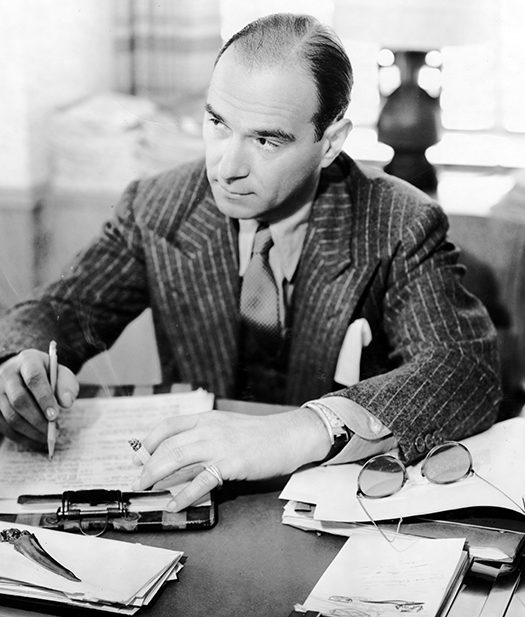
Robert Riskin, a skilled playwright-turned-screenwriter, had been working in Hollywood since the late 1920s. His partnership with Capra resulted in some of the era’s most memorable films, often blending witty, fast-paced dialogue with socially conscious themes. His writing was central to shaping Capra’s trademark blend of humor, romance, and idealism.
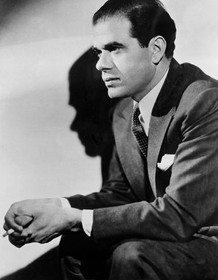
Photo by George Hurrell.
Clark Gable (1901–1960) was a Hollywood icon, known as the "King of Hollywood" for his commanding screen presence and rugged charm. He was named the seventh greatest male movie star of classic American cinema by the American Film Institute.

Gable's stepmother raised the tall, shy child with a loud voice to be well-dressed and well-groomed. She played the piano and gave him lessons at home. He loved to repair cars with his father, who insisted that he engage in masculine activities such as hunting. But he also loved literature; he would recite Shakespeare among trusted company, particularly the sonnets.

Gable appeared in over 70 feature films and first began acting in stage productions, before his film debut in 1924. Gable's acting coach, Josephine Dillon, was a theater manager in Portland. She paid to have his teeth fixed and his hair styled. She guided him in building up his chronically undernourished body, and taught him better body control and posture. He slowly managed to lower his naturally high-pitched voice, his speech habits improved, and his facial expressions became more natural and convincing. Dillon became his manager and also his wife; she was 17 years his senior. They moved to New York City, where Dillon found work for him on the stage.

After many minor roles, Gable landed a leading role in 1931. Joan Crawford asked for him to appear with her in Dance, Fools, Dance (1931). The electricity of the pair (and resultant affair; he divorced Dillon.) was recognized by studio executive Louis B. Mayer, who put them in seven more films. Subsequently he would become one of the most consistent box-office performers in the history of Hollywood, appearing on Quigley Publishing's annual Top Ten Money Making Stars Poll sixteen times.

He often acted alongside re-occurring leading ladies: seven movies with Myrna Loy, six films with Jean Harlow. Gable's "unshaven love-making" with braless Jean Harlow in Red Dust made him MGM's most important romantic leading man.

His film persona often depicted strong, confident men with a roguish appeal. Gable’s most famous role was Rhett Butler in Gone with the Wind (1939. Other major films include It Happened One Night (1934), for which he won an Academy Award for Best Actor, Mutiny on the Bounty (1935), San Francisco (1936), Test Pilot (1938)), The Hucksters (1947), Mogambo (1952) and The Misfits (1961), his final film.

Beyond his on-screen success, Gable led a fascinating personal life. He was married five times, with his third wife, actress Carole Lombard, being the love of his life. Her tragic death in a plane crash deeply affected him. He also had a daughter, Judy Lewis, with actress Loretta Young, though this remained a secret for many years. During World War II, Gable enlisted in the U.S. Army Air Forces, flying combat missions and earning military honors.

Claudette Colbert (1903–1996) was a French-American actress known for her wit, charm, and versatility. Born Émilie Claudette Chauchoin in Saint-Mandé, France, she moved to New York as a child. Initially aspiring to be a fashion designer, she shifted to acting while studying at the Art Students League.

Colbert's Hollywood career took off in the 1930s, making her one of the most bankable stars of the Golden Age. She won the Academy Award for It Happened One Night (1934), a landmark screwball comedy. Other notable films include Cleopatra (1934), Midnight (1939), and The Palm Beach Story (1942). She received additional Oscar nominations for Private Worlds (1935) and Since You Went Away (1944).

Known for her sophisticated wit, charm, and relatable screen persona, Colbert had a keen sense of comedic and dramatic timing.. Off-screen, she was private, maintaining a long marriage to Dr. Joel Pressman. In later years, she transitioned to television and stage, earning a Tony nomination in 1959. She spent her final years in Barbados, passing away at 92. Today, she is remembered as one of Hollywood’s most enduring and stylish leading ladies.

Tuesday, February 4, 2025


10 Thoughts on Alfred Hitchcock's 'The Birds'

In 1963, Hitchcock followed the mammoth success of ‘Psycho’ with an elusive, unsettling film unlike anything else he’d ever make.

By the 1960s, Alfred Hitchcock had become the most famous movie director in the world. Via cameos, a much-watched television program, humorous trailers, and books and magazines bearing his name and image, he’d become a kind of brand name. Brands create expectations. For The Birds, his 1963 follow-up to the massive success of the 1960 thriller shocker Psycho, he embraced some while discarding others.

1. It’s not the film I thought it was.

It’s very possible this is just me, but I’d come to regard The Birds as one of the more minor of Alfred Hitchcock’s major movies. I had not seen it since college until rewatching it recently and I remembered it as an excellent film that nonetheless didn’t play to Hitchcock’s strengths. It’s more monster movie than suspense film. It offered little of the psychological complexity of Hitchcock’s other films. Tippi Hedren was no Kim Novak. Rod Taylor was no Cary Grant (well, that was fair). Wasn’t the opening kind of slow? Was there really any even subtext?

Boy did I get it wrong.

2. The opening credits sequence a mini-masterpiece onto itself.

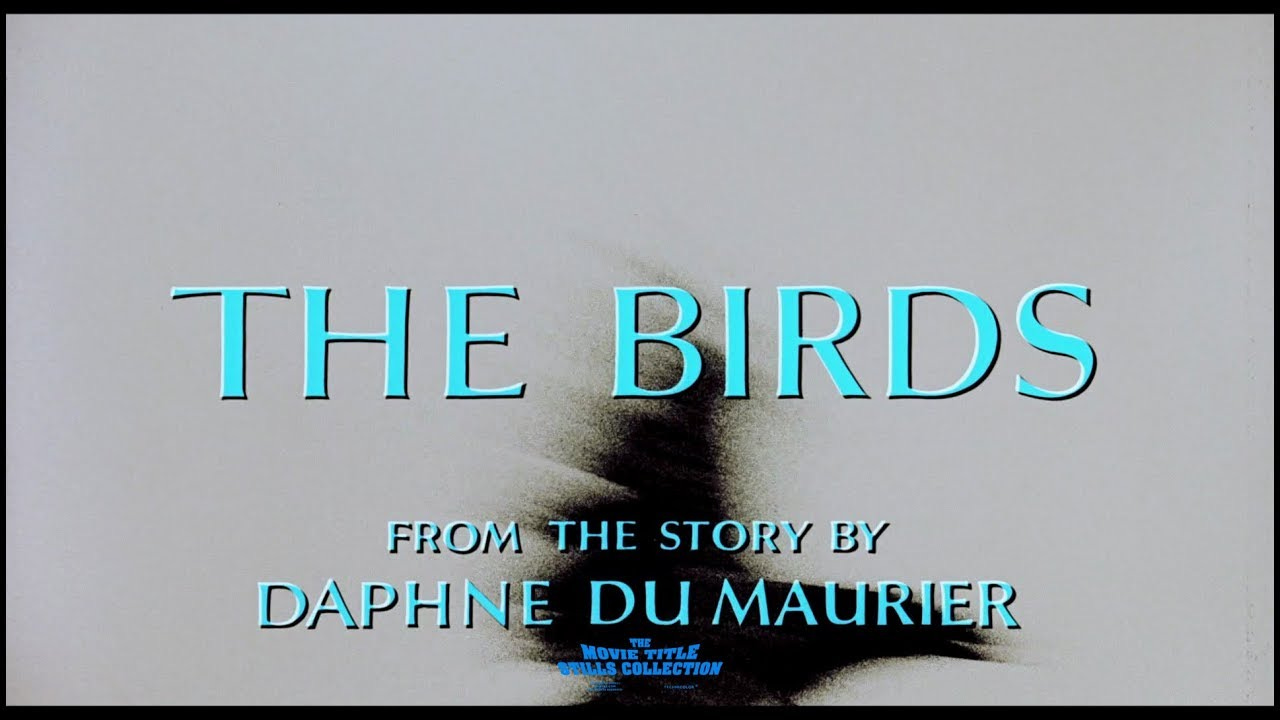
The silhouettes of birds flap frantically across a soft gray backdrop, accompanied by the sound of flapping wings, chirps and caws. I’m not sure how this was created. It appears to be images of real birds, but their movements are almost entirely on a two-dimensional plane, as if flying back and forth behind glass in a narrow space. It’s hard to find much information about titles designer James S. Pollak. He has credits on just one other film, The Wheeler Dealers (released, like The Birds, in 1963), though he apparently did uncredited work on the Grand Prix titles a few years later. Is he the same James S. Pollak who wrote the 1946 novel The Golden Egg, a satire of Hollywood? Maybe. Pollak would have been 37 at the time. He could have been a journeyman figure who wandered into creating titles for a few years then wandered out. Whichever the case, this a haunting and strange way to start the movie, made all the more unsettling by the cyan text and titles that fall together in pieces then fall apart just as quickly. In some ways, that process is just as apt a way to open this movie as the birds themselves.

3. What kind of film are we watching?

In the short Blu-ray documentary “Hitchcock’s Monster Movie,” horror scholar David J. Skal posits that, while not a monster movie itself, The Birds would not exist were it not for the giant monster movies of the 1950s. The formula, codified by films like The Beast from 20,000 FathomsThem!, Godzilla and others, involved beasts running amok and threatening civilization, usually as a result of science pushing nature too far. But is that really what’s going on here? Nature pushing back is posited as one explanation for the bird attacks, but not necessarily the most plausible reason in a film that never explains or resolves its central mystery. (More on that in a bit.) It’s another quote, this one in the feature-length doc All About the Birds, that unlocked something for me. Screenwriter Evan Hunter (probably now best known for the crime fiction he wrote under the name “Ed McBain”) claims he came on board after being told Hitchcock would be throwing out “everything but the title” of the Daphne du Maurier novella The Birds adapts and suggested beginning the film like a screwball comedy. *

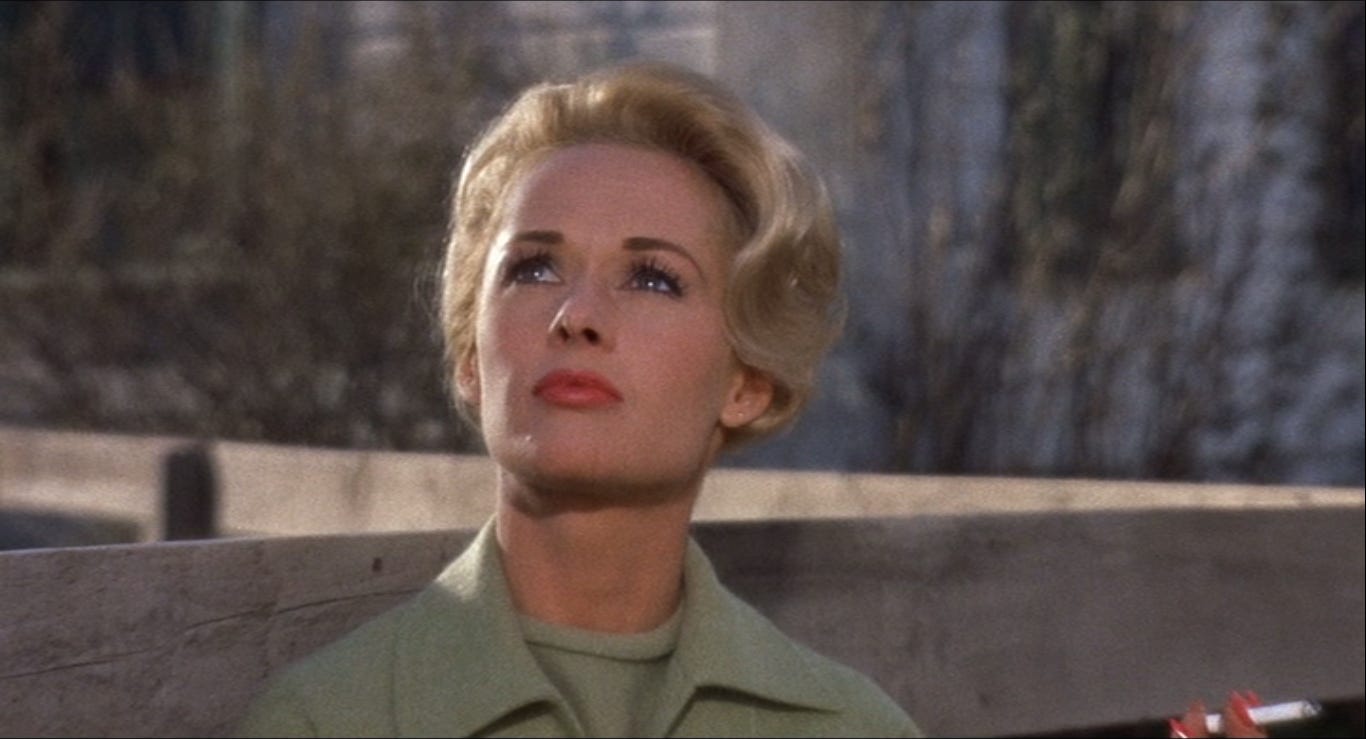
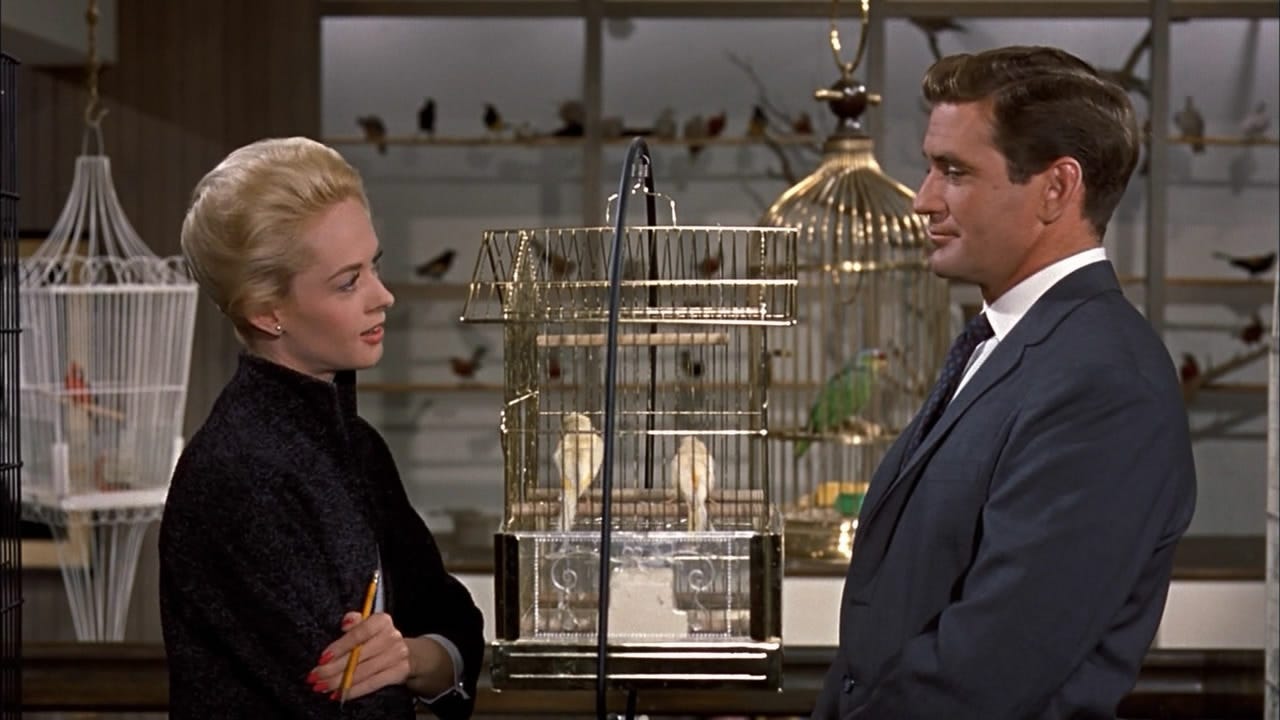
I’d never thought about it this way, but of course this is what’s going on in the film’s long lead-up to the first bird attack, a gull plunging at Hedren’s skull as she makes her way across Bodega Bay by boat. Hedren plays Melanie, the spoiled daughter of the publisher of a San Francisco newspaper. She has a meet-cute with Mitch (Taylor) in a pet store after Mitch recognizes her then plays along as she pretends to be an employee of the store, a mild example of the pranks that made her a semi-notorious figure. They bicker when she realizes he’s having her on and plots a kind of revenge by delivering the pair of lovebirds he was attempting to buy for his much younger sister Cathy (Veronica Cartwright). When told Mitch has left to spend the weekend at his family home in Bodega Bay, she follows him there.

It’s all classic screwball material. Melanie’s fur coat marks her as a high society outsider in the salt-of-the-earth community of Bodega Bay. She banters with Annie (Susanne Pleshette), a rival for Mitch’s affections. Yet it feels increasingly unsettling the longer it plays out. On page, it’s light comedy, but Hitchcock directs like, well, an Alfred Hitchcock film. When Melanie sneaks into Mitch’s family home while he’s out, everything about the scene suggests something horrible is about to happen. Then, when something horrible finally does happen, everything screwball goes out the window.

It’s incredibly spooky for reasons that are hard to pin down, a daring exercise in not giving the audience what they expect and repackaging the familiar in the form of the “wrong” genre. And yet, neither Hitchcock nor Hunter seems to have seen it this way. “Like all pictures of this nature, its personality didn't carry,” Hitchcock told Cinefantastique in a making-of article published in 1980. "If the picture [he always said ‘picture,’ never ‘film’] seems less powerful today than it did in 1963, that's the main reason, that the personal story was weak. But don't tell that to Evan Hunter.” 

He went on to call Hunter not “the ideal screenwriter,” prompting a defensive response from Hunter in the same article (in which he also laments the presence of scenes written by an unknown hand): 

“If there were weaknesses in my screenplay […] they should have been pointed out to me before shooting began, and they would have been corrected. I feel the weaknesses were manifold, but only some of them were in the script. The concept of the film was to turn a light love story into a story of blind, unreasoning hatred. Since Hedren and Taylor could not handle the comedy at the top of the film, the audience became bored. They had come to see birds attacking people, so what was all this nonsense with these two people, one who can't act and the other who's so full of machismo you expect him to have a steer thrown over his shoulder? Bad acting and — for Hitchcock — incredibly bad directing.”

The film, however, suggests both were wrong. Something about what we see feels off even before the birds begin attacking. When they do, it plays less like a shock than a confirmation that something is terribly wrong with what we’re watching.

4. The sound of no music…

Hitchcock had a long partnership with composer Bernard Herrmann, who’s credited as a “sound consultant” here. But The Birds has no score, just an eerie absence that contributes to the airlessness of the screwball material that opens the film and makes every scene unbalanced and uneasy. Score music, particularly powerful, direct work like Herrmann’s, suggests how we should feel. The Birds offers no such guiding hand, which ends up making tense exchanges between characters feel heightened and the bird attacks more immediate.

5. …but not the sound of silence

Instead it’s bird noises that fill the sonic void. Well, not exactly bird noises. Hitchcock turned to Oskar Sala and Remi Gassmann to create bird effects using an early electronic synthesizer called the Trautonium. And by “early,” I mean decades for The Birds. The work of German engineer Friedrich Trautwein, the Trautonium was then refined by Sala, who continued to work with the instrument until his death until 2002. It’s an odd instrument, a kind of keyboard without keys that creates tones that fall somewhere between the sounds created by a Theremin and a Moog. It can be quite beautiful, in the right hands. Sala wasn’t interested in creating beautiful noises, however, crafting instead a bed of not-quite-nature cries and caws that contribute to the film’s unnerving effect. (There’s a short news item about Sala’s work on The Birds on YouTube. It’s in German. Yyou can turn the subtitles on.)

6. Natural’s not in it.

Bird noises that resemble but don’t exactly match bird noises we know fit perfectly into the design of the film. The film uses real birds but also dummies and visual effects. Some of the latter is the work of Ub Iwerks, the animator now credited as Mickey Mouse’s co-creator. Iwerks was nearing the end of his long second stint at Disney, while also working for other studios. One of his innovations was the sodium vapor process, which improved on bluescreen effects.

Improvement doesn’t mean perfection. The seams show in The Birds’ Oscar-nominated effects. But they also seem true both to the not-quite-natural sounds the birds make as well as the off-reality world of the film. Hitchcock disliked shooting on location, and though The Birds contains quite a few location scenes, it mixes them with those shot in the studio, sometimes against sweeping matte paintings. They’re not fully convincing, but they don’t have to be, just as the frictionless rear-projection driving scenes don’t have to look exactly right. I much prefer the stylized reality of these touches to many contemporary greenscreen effects that miss realism by a couple of inches and end up swallowed by the uncanny valley. As longtime readers and Next Picture Show listeners know, I could go on at length about my distaste for the idea of “dated” effects. I won’t continue this train of thought any further, but I think The Birds can be Exhibit A for my argument going forward. No, the effects don’t quite feel real. Why should they? You’re watching a movie. Reality is elsewhere.

7. Blondes have only slightly more fun.

The Birds has become a topic of much conversation in the past dozen years, first due to the HBO movie The Girl, which depicts Hitchcock as behaving abusively toward Hedren after she rejected his sexual advances, and again in 2016 when Hedren made even more unsettling claims in her memoir, Tippi. Though those claims fall outside the scope of this piece, there’s no reason not to believe her and they’re now part of the history of the film and hard to put out of mind when watching it. Whatever happened off screen, The Birds is certainly another Hitchcock film built at least partly around the undoing of an icy blonde, though at least Melanie makes it out of this one alive, unlike poor Marion in Psycho or the blondes of other movies. But spare a moment for Hitchcock’s non-blondes. or at least the blondes that don’t fit the mold. Barbara Bel Geddes’ fate in Vertigo, forgotten by both the protagonist and the film at the halfway point, looks kind to what happens to Suzanne Pleshette’s Annie here.

8. Love is an uneven polygon.

Melanie desires Mitch, despite her protestations. Mitch desires Melanie, despite his own. Annie still wants Mitch, even sticking around in Bodega Bay after the end of their relationship, brought about the icy behavior of Lydia (Jessica Tandy), Mitch’s mom. (Does Tandy smile once in this movie? Something to watch on a subsequent viewing.) Lydia fears being alone and clings to Mitch after the death of her husband. When Lydia tells Mitch he’s not the man his father was, it wounds him. Annie claims the situation can’t be read psychoanalytically, “With all due respect to Oedipus.” I’m not so sure. It’s all quite tense, vague, and unsustainable, a situation bound to fall apart and crush some of those involved. The drama plays out—sometimes at a simmer, sometimes at a boil—even as the bird attacks intensify. Are the birds, as John Carpenter has suggested, “a symbol of the tensions going on between the characters?”

9. What’s happening??!?? [Insert the appropriate Poltergeist gif here] 

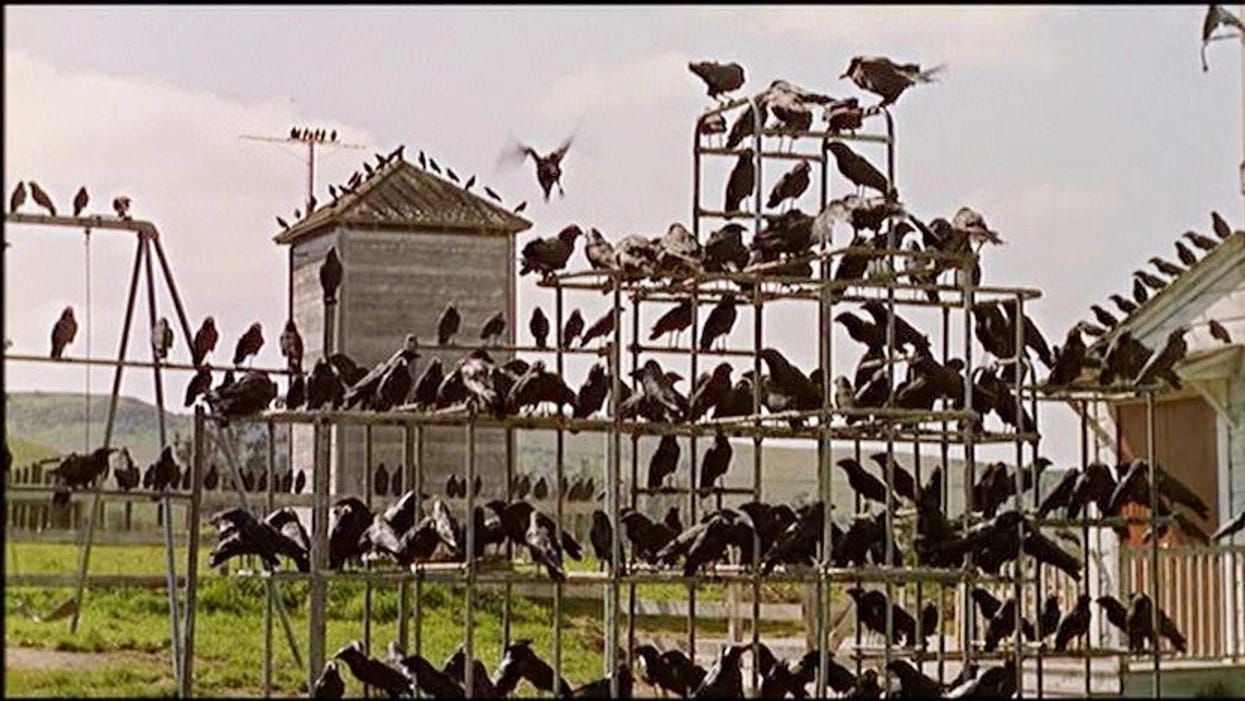
So, maybe the birds are a symbol of the tensions between the film’s characters. Or maybe they’re not? In one of the film’s best scenes, the customers at a Bodega Bay diner toss around options. Mrs. Bundy, a bird enthusiast (“ornithology happens to be my avocation”), can’t believe birds would attack humans but introduces the nature-in-revolt possibility anyway when she says, “It is mankind, rather, who insists upon making it difficult for life to exist upon this planet.” Or maybe, as another customer suggests, it’s the end of the world. Or maybe, as a terrified woman proposes after a subsequent attack in which all hell breaks loose, Melanie is to blame. “They say when you got here the whole thing started,” she tells the outsider, phrasing that suggests she’s not alone in this opinion. (We first see birds behaving suspiciously in San Francisco. Perhaps they followed her. Or maybe the love birds are to blame?) So which is it? Or is it none of the above? I don’t think the answer can be found in the film itself. These theories are thrown out in the midst of a busy diner against the backdrop of orders being taken. Characters talk over one another. It’s not quite a scene from a Robert Altman film, but the controlled chaos suggests a lot of ideas flying around with no firm ground upon which to land.

10. Never the end.

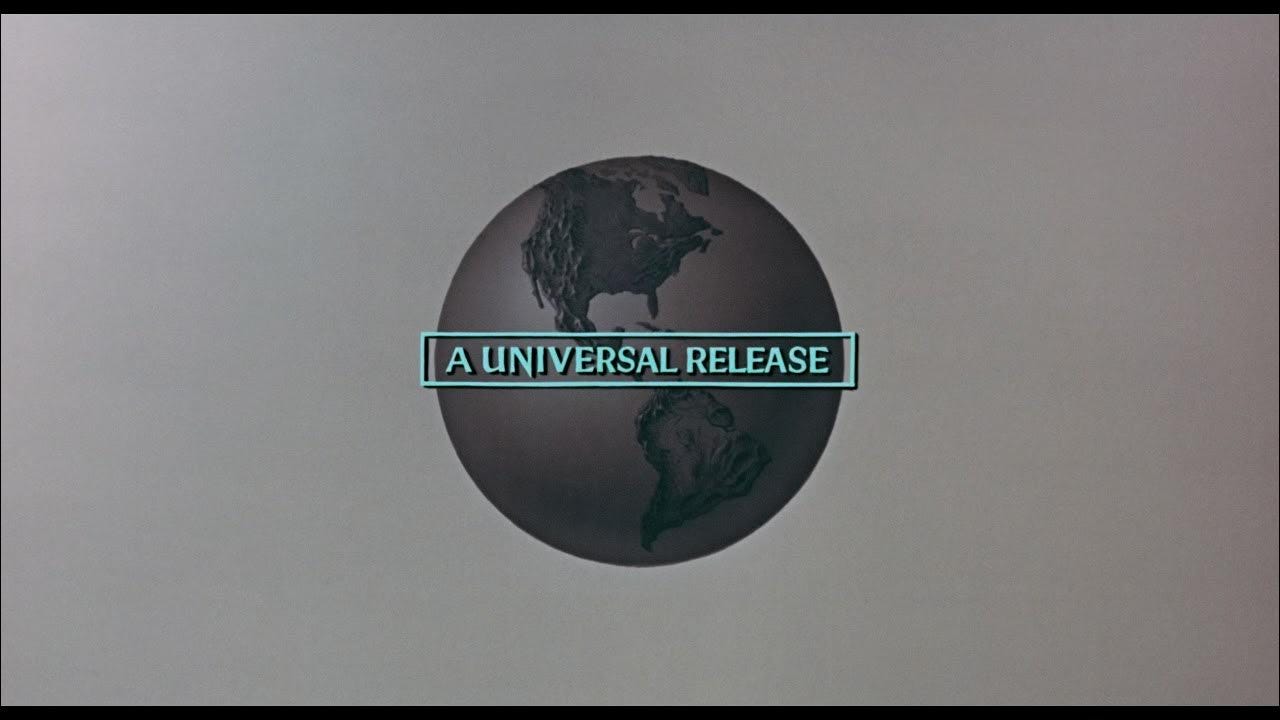
The first time I heard of Alfred Hitchcock was when a friend of my parents told me, in frustration, “his movies don’t have endings.” Pressed, she elaborated, “They don’t end right.” I wonder if she specifically had The Birds in mind? If so, she’s not that far off. The plan, until late in production, was to end the film with Mitch, Cathy, Lydia, and the battered Melanie making their way through a bird-filled town until they escaped Bodega Bay. Instead, it ends as it ends now, their fate unclear as they drive through a landscape filled with noisy birds who might be plotting against them and bathed in sunlight that could be on loan from a Biblical epic. And maybe Bodega Bay was just the first place to fall. Maybe there is no escape. The Universal logo that ends the film provides no answers. Originally Hitchcock didn’t even want this, but it almost feels necessary, a final reminder, as the last echoing caw fades from the soundtrack, that we’ve been watching a movie. Yet, as a punctuation mark, the logo plays more like and ellipses than a period. It’s the end, and yet…

* This is mostly true. Du Maurier’s novel depicts a similar bird uprising entirely from the perspective of a Cornish farmhand attempting to protect his family. Du Maurier’s descriptions of the birds’ attacks on the protagonist’s home, however, clearly inspired similar scenes in the film.

Leave a comm