

Orson Welles's second feature, which followed his film debut and now bonafide classic "Citizen Kane" less than a year later, is in many ways his most personal and most impressive, but it's also the one most damaged by insensitive studio re-editing, which sliced off 45 minutes of Welles's footage and tacked on a few disappointing new scenes. For the most part, it is a very close adaptation of Booth Tarkington's novel about the relentless decline of a wealthy Midwestern family through the rise of industrialization. Welles makes the story even more powerful through his stylish mastery of production design, lighting and cinematography. The film also features some of the best acting – alternatingly stylized and restrained – to be found in American movies, including that of Agnes Moorehead, Joseph Cotten, Dolores Costello, Anne Baxter, Tim Holt, and Ray Collins.
Welles wrote the script in nine days, deleting much of Tarkington's sentimentality, and with a Proustian remembrance of a life of gentility now past, concentrated on the psychological darkness which destroyed the Amberson clan. His was a literary rendering of what was essentially a second-rate novel, a lament, he says, "not so much for an epoch as for the sense of moral values which are destroyed." The film centers on the ill-fated love between the gentlemanly horseless carriage manufacturer Eugene Morgan and the exquisitely beautiful Amberson matriarch, Isabel; the reaction of her spoiled son George Minafer, whose "come-uppance" eventually transpires; and the fate of neurotic spinster aunt Fanny Minafer.
------------------------------------------
The film still looks a masterpiece, astounding for its almost magical re-creation of a gentler age when cars were still a nightmare of the future and the Ambersons felt safe in their mansion on the edge of town. Right from the wryly comic opening, detailing changes in fashions and the family's exalted status, Welles takes an ambivalent view of the way the quality of life would change under the impact of a new industrial age, stressing the strength of community as evidenced in the old order while admitting to its rampant snobbery and petty sense of manners. With immaculate period reconstruction, and virtuoso acting shot in long, elegant takes, it remains the director's most moving film, despite the artificiality of the sentimental tacked-on ending. Geoff Andrew,-Time-Out:

Following the financial disaster of Kane , RKO executives compelled Welles to choose as his next film a subject with commercial appeal. Welles wanted to film The Pickwick Papers with W. C. Fields but Field's schedule would not permit it. As Booth Tarkington was a favorite novelist of Welles, he selected instead the author's 1919 Pulitzer Prize-winning novel about the decline and fall of an aristocratic family brought on by the encroaching industrial revolution at the turn of the century. Welles had already presented a radio version of the novel in 1939 starring himself and Walter Huston.
Part of the problem once he started filming was that Welles no longer answered to the sympathetic George Schaefer, who as president of RKO had allowed him space to make ''Citizen Kane.'' RKO was now in thrall to a man whose brain was stamped with a giant dollar sign, Charles Koerner. Koerner was the first of an army of studio chieftains who seemed to be put on this earth for the sole purpose of butchering Welles's artistic efforts. The war of attrition that Koerner waged against Welles is spelled out by Clinton Heylin in agonizing and sometimes exhausting detail in his book, "Despite the System, Orson Welles Versus the Hollywood Studios." While Welles managed to shoot his own screenplay pretty much as he envisioned, he came up short in the end because he lost the precious power of the final cut he had on ''Citizen Kane.''. Although Welles blamed Schaefer and never forgave him, Schaefer had been caught in a power struggle with the domineering Koerner and lost, surrendering the clout and courage he had shown backing up Welles on ''Citizen Kane.'' Koerner represented the Eastern money of power broker Floyd Odlum and his Atlas Corporation, who were bailing out RKO to the tune of $100 million.
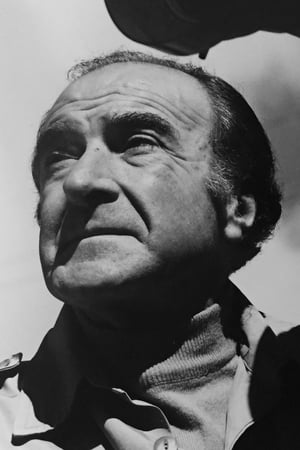
Production itself was fraught. After Gregg Toland, the masterful cinematographer of Citizen Kane, proved unavailable, Welles brought in the journeyman Stanley Cortez,[above] who had a reputation for working fast, mostly from B pictures for Universal. But when Cortez, suddenly seized with his own artistic ambitions, became painstakingly slow, Welles replaced him with Harry J. Wild as principal cameraman. Bernard Herrmann was the (uncredited) composer, but not exclusively.
To complicate matters further, the U.S. had just entered World War II, and in late December 1941 Welles agreed to shoot a goodwill documentary in Brazil, to be part of an omnibus coproduction—It’s All True—between RKO and the U.S. government. Shooting had to happen immediately, during Carnival, so he recorded the narration for Ambersons quickly and worked with Robert Wise long-distance, via telephone and telegram, on the edit, until RKO, anxious to open in the spring, ordered [what would become] that infamous sneak preview in Pomona, California. There were further cuts, and material added without Welles’s consent, until control was taken away from Welles—the beginning of the end of any hope for a finished film that would reflect his design.
Robert Wise 
[Joseph McBride’s 28-minute 2018 video essay (in the Criterion Collection DVD)....re-visits that myth about the Pomona preview. 72 cards were negative but 52 were positive, hardly enough to cause frenzy in the minds of executives. The film did even better at the Pasadena preview, where it elicited only 18 negative responses. Neither did Welles abandon the film. Robert Wise was supposed to travel down to Brazil to work with Welles on editing the work print, but wartime travel restrictions supposedly prevented this. McBride now believes that this “could be an excuse” on the part of those RKO factions hostile to the director.--Tony Williams, Film International]
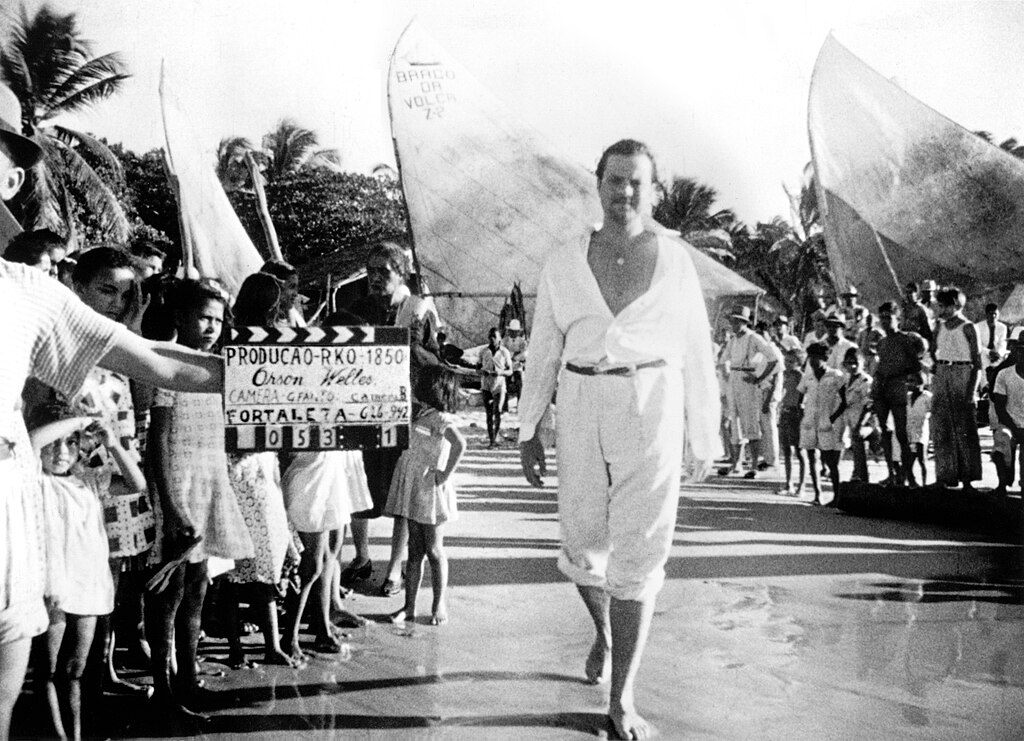 Ultimately It's All True aborted and RKO proceeded to edit the film from Welles' reduced 131 minutes to 88 minutes, including the insertion of the hospital scene at the end. This scene had not been written by Welles and was directed by Freddie Flick and scored by Roy Webb, instead of Bernard Herrmann whose haunting score is so essential a part of the film.
-------
Reviews of Ambersons were less than enthusiastic. Many seemed to expect a depiction of the typical family wrapped in sugar-spun Americana, rather than the in-depth analysis which revealed warts and all. The New York Times opined that Welles had wasted his abundant talents on "a relentlessly somber drama on a barren theme." The picture was not the commercial success that RKO had hoped for and it was well over a decade before the film was received and appreciated for the master stroke it is.-

The beginning of the film provides a picture of a bygone era with its good humor and homey virtues, after which Welles slowly and deliberately unmasks the Ambersons' imperfections. The dramatic use of light and shadow in Cortez's deep-focus photography accentuates and enhances the characters' conflicts. Welles employed a nostalgic irising in and out to begin and end scenes, and he edited the film in the camera—scene by scene, vignette by vignette—rather than relying on the cutting room after the fact. He spoke the voice-over narration himself, a skill honed through his vast experience with radio, a narration he likened to the titles in silent films. He also incorporated overlapping dialogue and street noises as part of the sound track and used groupings of the townspeople in the film as a Greek chorus, whose chattering, gossipy observations of the vicissitudes of the Amberson-Morgans provided succinct commentary and embellished the storyline.

Exemplifying one of the town’s quaint traditions, the dandy and sometimes poet Eugene (Joseph Cotton) arrives on the Amberson front lawn with an orchestra, to serenade his ladylove. But before the ardent but drunken suitor can even begin warbling, he crashes onto his bass viol, instantly becoming a laughingstock and thereby losing her hand. Eugene’s mishap beneath the window of the ravishing Isabel Amberson (Dolores Costello) at first seems like just a bit of tomfoolery, a chivalric gesture gone awry. So brief is its duration, so breezily light the tone of its telling, that we could almost miss or underestimate the fateful event. Yet it prefigures all the misery and disappointment that follows.
As for Eugene, [in Tarkington's novel] he started out as a popular fellow, spoiled, a spendthrift without money of whom nothing much was expected. He might have lost out anyway, but the fall from grace that broke his heart spurred him to make something of himself.
-----------------------------------------------------------------------
The film serves, on its face, as a commentary on the effects of the automobile on society, an invention which saw a rise in deaths, a decline in general health and an overall poisoning of the atmosphere. On a smaller scale, the introduction of the car into society made the Ambersons’ real estate depreciate in value, with suburban living (now accessible by car) suddenly taking precedence. Juxtaposed with the Ambersons’ robust mansion, the ever-developing outside world feels flimsy. Foreboding, even. The car also completely devastated a way of life—the slow, ambling life of luxury that the Ambersons enjoyed—and made people like them obsolete, never to be seen again. Given all of this, the optimistic ending of Ambersons makes no sense, and only functions to revise a very real change in society.
It’s likely the case that Welles’ film would have ended like the novel if his cut had made it to theaters. More than anything, then, Ambersons is a testament to how much society bends over backwards to sugarcoat things—even if that means drastically contorting reality. Fiction allows audiences to revise uncomfortable societal truths. As long as that is possible, we would much rather see ourselves in a positive light than hold a mirror up to our unseemly realities.
 Paramount to the success of Ambersons is the excellent acting. Tim Holt as George. ["Holt’s intense concentration on what another character says, you can see all of George’s calculations reflected: 'What does this have to do with me? How do I benefit?'--Farran Smith Nehme, TCM]
 Cotten capturing Welles’s own ambivalence [towards his invention] in the wonderful dinner scene where the relentlessly antagonistic George viciously insults him and his automobile, while Eugene responds not with understandable anger or resentment but with quiet affability, concession: he agrees with George, expressing his own reservations about the invention and what it will do to humanity. We never know what technology will do and how it will change us, he says, and he might be talking about the electronic inventions of a century later.

But, the acting honors unequivocally belong to Agnes Moorehead. No one steals the show in this magnificent group effort, but Moorehead as Aunt Fanny casts the longest shadow, a scarecrow who both fascinates and repels, warped by frustrated passion, always on the verge of hysteria. Her scenes with Holt are savage and violent but also wildly, darkly comical, as the two characters mimic each other, scraping on each other’s nerves, she trying to dissemble and disguise, he to ferret out every truth about Eugene’s place in the family. Two spinsters locked together to the bitter end. Her virtuoso performance is one of the finest on the American screen and earned her the New York Film Critics Award..
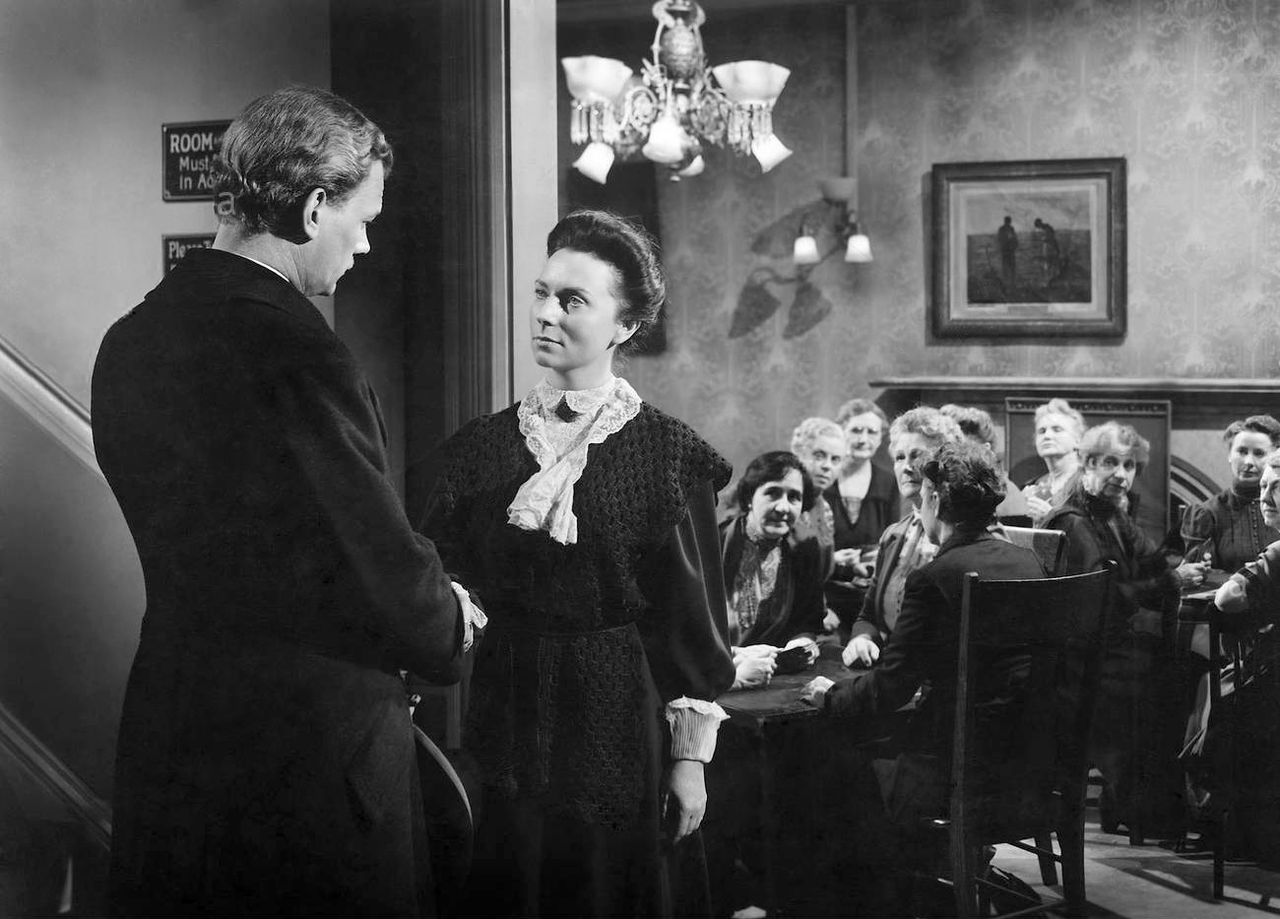 [About that sentimental tacked-on ending,] it isn’t even close to the ending of Welles’s own bleak design, shot by the director [A shot of which is above, released by RKO for promotional purposes.] and thought by him to be the best scene in the film. (Though the studio version is arguably a little closer to the brush-with-the-supernatural conclusion of the Booth Tarkington novel.)

In Welles’ version, Eugene visits Fanny in the boarding house where she now lives. It is quite apparent that he is doing very well in life, while she has fallen on hard times. She is hardly responsive to him as he pours out his heart; she is clearly bitter, having fostered an unrequited love for years. Eugene leaves the house, which is the former Amberson mansion. Eugene comes across as completely insensitive to Fanny and her desires, but then he seems to have overlooked her his entire life.
What I prefer to think of as the ending of The Magnificent Ambersons, showing George’s true contrition, follows his long walk home after his mother has died, through the bustling and no-longer-recognizable town.....Now, on the eve of his and Fanny’s departure from the mansion, he kneels beside her bed as the camera pulls slowly backward from his silhouette, and prays, “
------------------------
Bazin’s early praise of Welles, and of Toland, applauding the principle of long takes and deep focus as a new kind of cinematic realism, has come to be modified—“realism” is, after all, a term whose meaning shifts with decades and fashion. There is nothing naturalistic or “neutral” in Welles’s films, nothing in the expressionistic sets, the complex compositions and startling angles, that resembles the way we sit in a room and idly take in its properties. He is deciding what we will see and how we will see it, deliberately creating a theatrical atmosphere. But the aspect of Bazin’s realism that remains is the psychological one—it resides, like Shakespeare’s, in the glorious ambiguity of character. Bazin points to the emotional suspense created in The Magnificent Ambersons’ kitchen scene by the immobility of the camera, and Welles’s refusal to cue the audience through cuts, underlining, close-ups. No one in Welles’s work is all good or all bad, and the putative villains are complex and fascinating, the heroes riddled with doubts or fatal weaknesses. His attraction to the variety of human nature, and the way character determines fate, has never been more evident than in this ensemble. 
